

Origin & History Of Nandyal
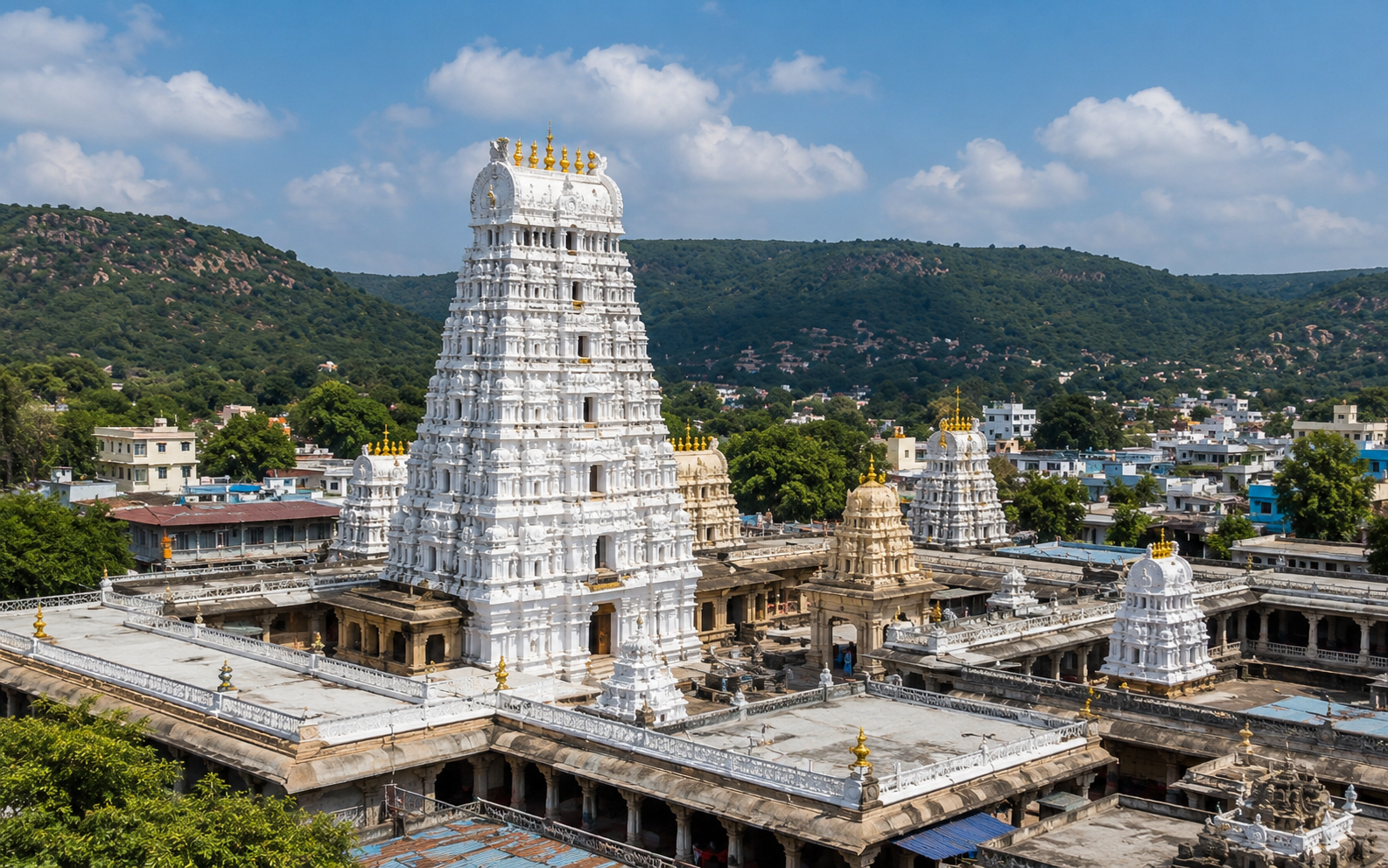
Nandyal District has a rich and fascinating history that reflects the cultural, spiritual, and historical heritage of Andhra Pradesh. The name “Nandyal” is believed to have originated from the renowned Nava Nandi Temples, a group of ancient shrines dedicated to Lord Shiva that have attracted devotees for centuries. Situated at the foothills of the majestic Nallamala Hills, the region flourished under the rule of various dynasties, including the Cholas, Kakatiyas, Vijayanagara rulers, and local kingdoms, each contributing to its development and cultural legacy. Over time, Nandyal emerged as an important center for religion, trade, and agriculture, playing a significant role in the growth of the Rayalaseema region. The district is home to numerous historical monuments, temples, inscriptions, and heritage sites that stand as testimonies to its glorious past. Today, Nandyal proudly preserves its rich traditions and historical significance while progressing towards a modern future, making it a unique blend of heritage, spirituality, and development.
The Spiritual Heart of Rayalaseema
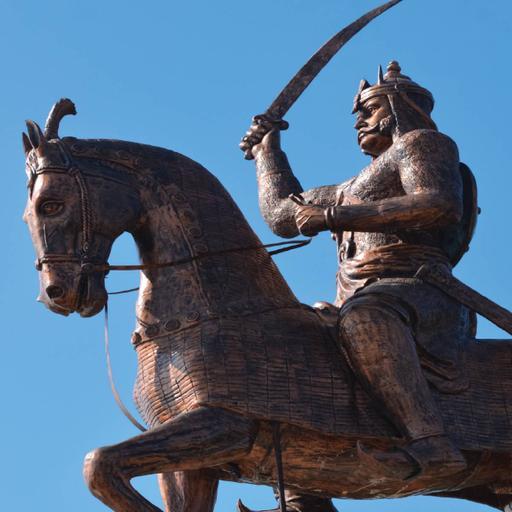
Uyyalawada Narasimha Reddy – Pride of Nandyal
Uyyalawada Narasimha Reddy is celebrated as one of the earliest freedom fighters of India and a symbol of courage and resistance in the Rayalaseema region. Born in Uyyalawada village, located in present-day Nandyal district, he led a historic rebellion against British rule in 1846, inspiring people to stand against oppression and injustice. His unwavering determination, leadership, and sacrifice earned him a respected place in the history of Andhra Pradesh and the Indian freedom movement. The district takes great pride in preserving his legacy through memorials, cultural programs, and historical remembrance. His life continues to inspire generations with the values of bravery, patriotism, and selfless service to society, making him an enduring icon of Nandyal’s rich historical heritage.
Blessed with Nature's Beauty
Nandyal is also blessed with remarkable natural beauty, featuring scenic landscapes, green surroundings, and nearby hills that enhance its overall charm. The region is enriched with picturesque views that create a calm and refreshing atmosphere for visitors. Its natural environment, including rivers, rocky formations, and forested areas, adds great ecological value to the district. The pleasant climate throughout the year further makes it an inviting place for nature lovers and travelers. These natural attractions, along with its cultural and spiritual importance, make Nandyal a unique and peaceful destination for all. It continues to attract visitors who seek both relaxation and a closer connection with nature.
District Overview
Nandyal District is one of the prominent districts located in the southwestern region of Andhra Pradesh. Established on 4 April 2022 as part of the state’s district reorganization, it was carved out of the erstwhile Kurnool District to strengthen administrative efficiency and bring governance closer to the people. The district headquarters is located in Nandyal, which serves as the administrative, commercial, and educational center of the district. Known for its historical significance, fertile agricultural lands, and spiritual importance, Nandyal District is home to several renowned pilgrimage destinations, including the sacred Srisailam Temple and the famous Mahanandi Temple, making it an important cultural and religious destination in the state.
Nandyal District is characterized by a diverse landscape comprising fertile plains, forested hills, river basins, and rich natural resources. Agriculture forms the backbone of the district’s economy, with major crops including paddy, cotton, groundnut, sunflower, maize, and pulses. The district is also well known for its irrigation facilities, limestone reserves, and growing industrial and infrastructure development. Strategically located with excellent road and rail connectivity, Nandyal serves as a gateway to several important pilgrimage centers and neighboring districts. With its unique blend of ancient heritage, agricultural prosperity, natural beauty, and modern development, Nandyal District continues to emerge as a key administrative and economic region of Andhra Pradesh while preserving its rich cultural legacy.
Tourist Attractions
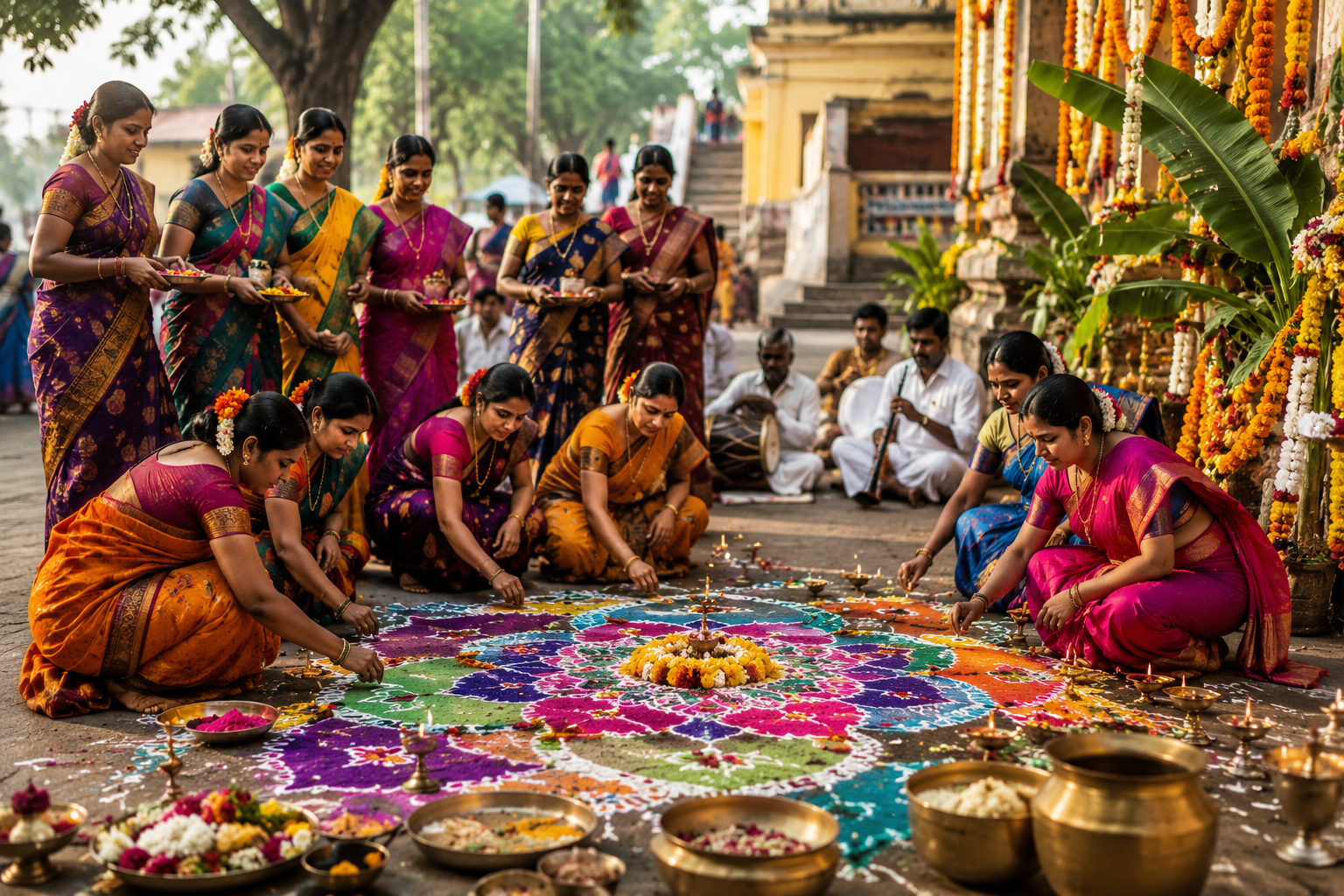
Culture & Heritage
1. CULTURE
2. TRADITIONS
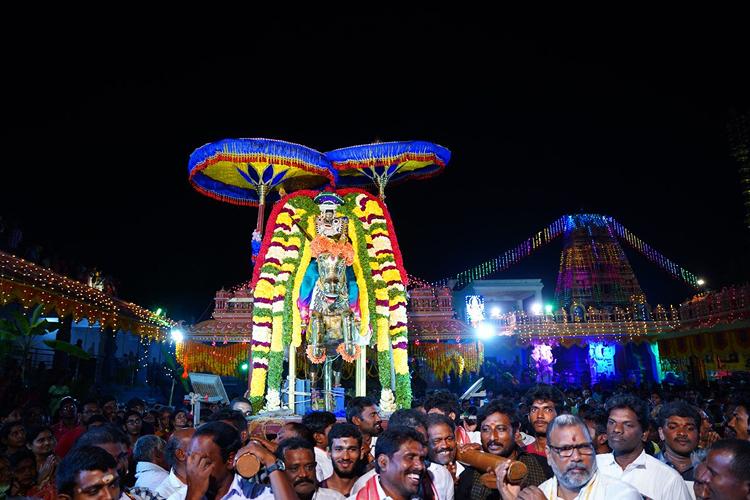
3. FESTIVALS
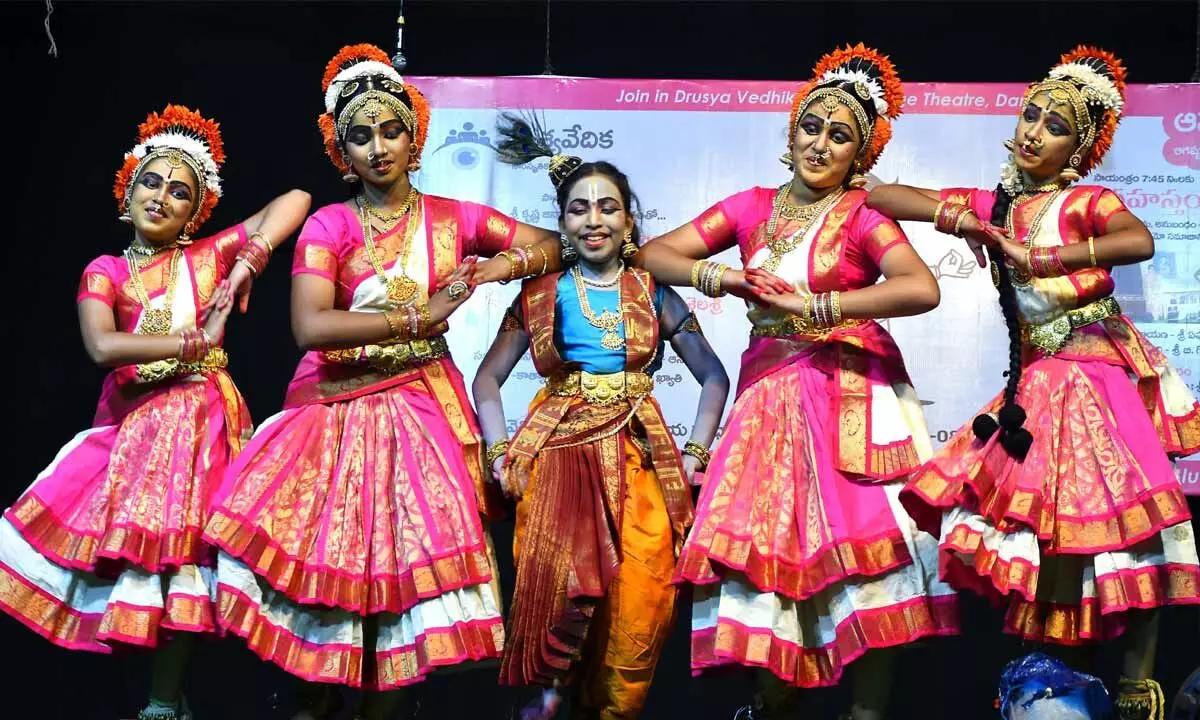
4. FOLK ARTS
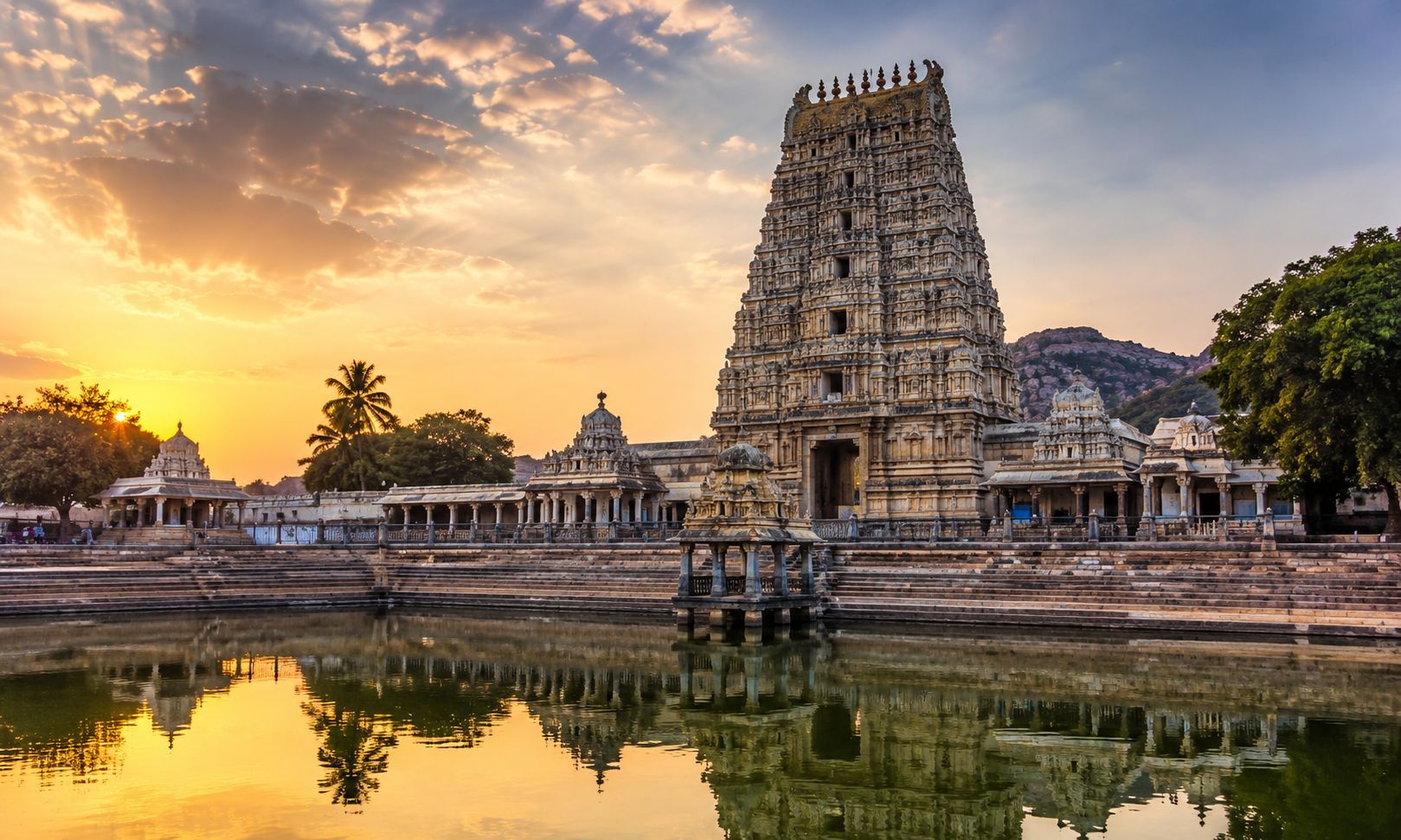
5. HERITAGE SITES
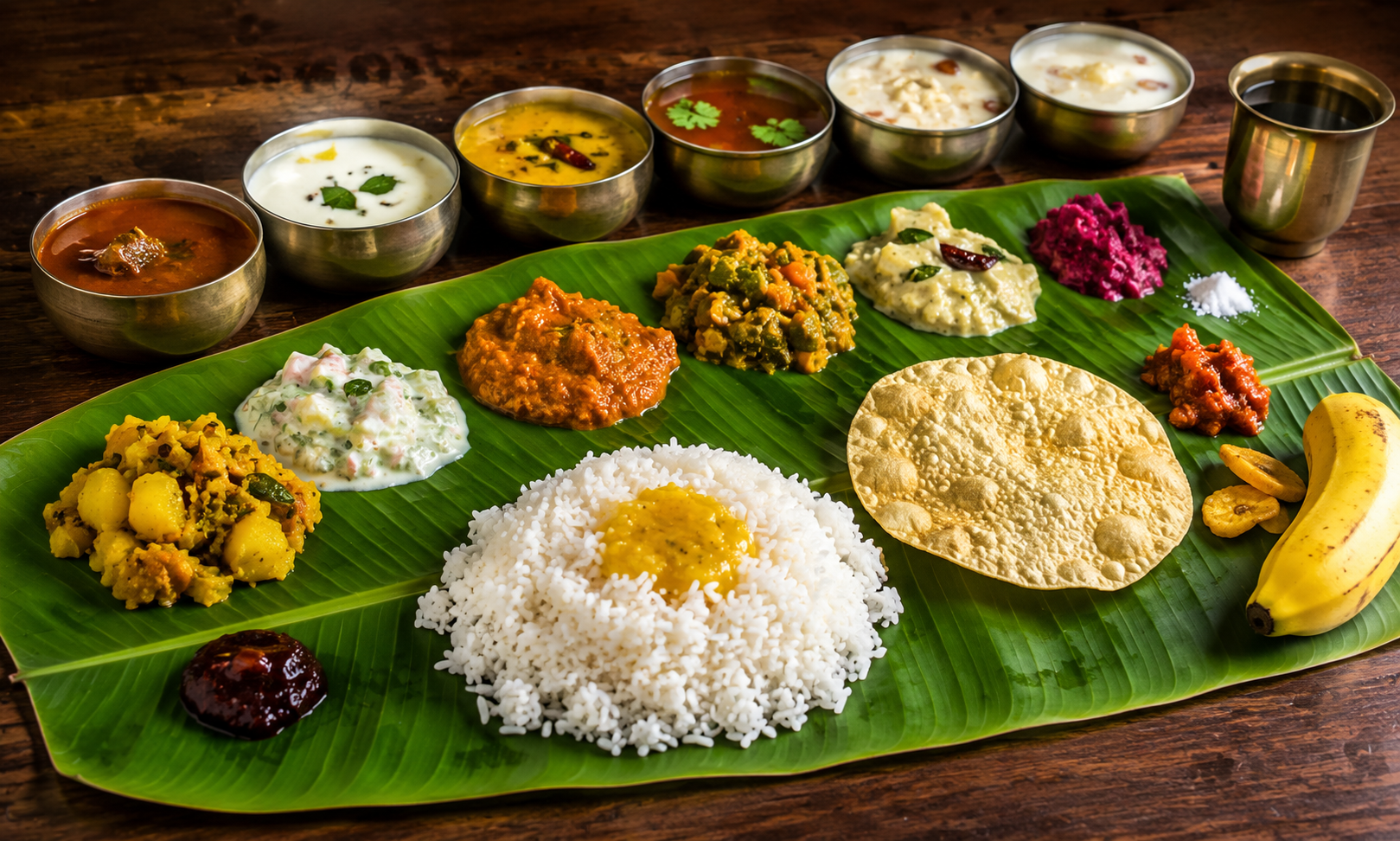
6. TRADITIONAL CUISINE
Administrative Divisions
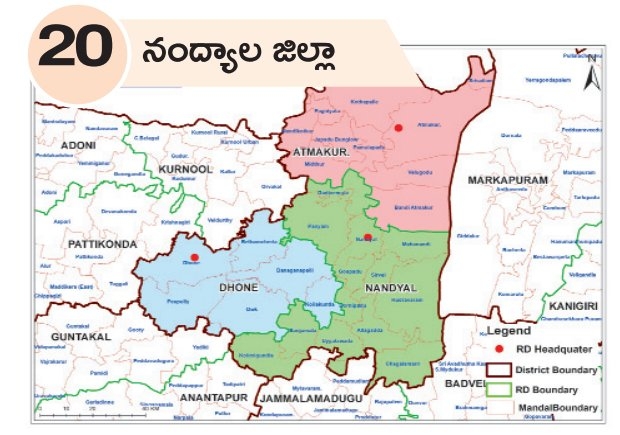
Revenue divisions are the backbone of district administration. They help in efficient governance, revenue collection, and public service delivery at the grassroots level. These divisions act as a vital link between the district administration and local communities, ensuring smooth implementation of government programs and citizen welfare initiatives. They oversee land administration, disaster management, and law-and-order coordination within their jurisdiction. Revenue officials work closely with various government departments to address public grievances and developmental needs. These divisions play a crucial role in implementing welfare schemes and ensuring benefits reach eligible citizens efficiently. Their structured administration strengthens transparency, accountability, and effective governance across the district.
Headquarters: Nandyal
Nandyal Revenue Division serves as the administrative and economic center of Nandyal District. The division plays a crucial role in implementing government programs, delivering public services, and supporting regional development. With its strong agricultural base, growing urban infrastructure, and cultural significance, the division contributes significantly to the district's overall progress.
Mandals: Nandyal, Mahanandi, Panyam, Gospadu, Gadivemula, Sanjamala, Kolimigundla, Sirvel, Uyyalawada, Pagidyala, Dornipadu, Jupadu Bungalow, Nandikotkur, Velugodu, Bandi Atmakur, and Midthur.
Key Highlights
- Division Headquarters: Nandyal
- Mandals Covered: 16
- Major Sectors: Agriculture, Trade, Education, Tourism
- Key Attractions: Mahanandi Temple, Nava Nandi Temples, Nallamala Region
- Development Focus: Infrastructure, Irrigation, Public Services, Rural Development
Headquarters: Allagadda
Allagadda Revenue Division is an important administrative division of Nandyal District, known for its rich cultural heritage, agricultural activities, and proximity to major religious and tourist destinations. The division plays a key role in implementing government programs, promoting rural development, and supporting the socio-economic growth of the region. Its strategic location makes it a vital center for administration, trade, and public services.
Mandals: Allagadda, Banaganapalle, Chagalamarri, Rudravaram, Koilkuntla, Owk, Bethamcherla, and Peapully.
Key Highlights
- Division Headquarters: Allagadda
- Mandals Covered: 8
- Major Sectors: Agriculture, Trade, Tourism
- Key Attractions: Yaganti Temple, Belum Caves, Banaganapalle Fort
- Development Focus: Rural Development, Infrastructure, Public Services
Headquarters: Banaganapalle
Banaganapalle Revenue Division is a significant administrative division of Nandyal District, renowned for its agricultural prosperity, historical heritage, and tourism potential. The division plays an important role in delivering public services, implementing development programs, and supporting the region's economic growth. Famous for its world-renowned Banaganapalle mangoes, the division contributes substantially to the district's agricultural and cultural identity.
Mandals: Banaganapalle, Owk, Koilkuntla, Sanjamala, Kolimigundla, and surrounding areas under the division's jurisdiction.
Key Highlights
- Division Headquarters: Banaganapalle
- Major Sectors: Agriculture, Horticulture, Trade, Tourism
- Famous For: Banaganapalle Mangoes
- Key Attractions: Yaganti Temple, Banaganapalle Fort, Belum Caves
- Development Focus: Irrigation, Rural Development, Infrastructure
Headquarters: Atmakur
Atmakur Revenue Division is an important administrative division of Nandyal District, strategically located near the Nallamala Forests and the gateway to the sacred Srisailam region. The division plays a key role in governance, public service delivery, and rural development. Known for its natural landscapes, agricultural activities, and religious significance, Atmakur Revenue Division contributes substantially to the district’s economic and social development.
Mandals: Atmakur, Bandi Atmakur, Velugodu, Mahanandi, Gospadu, and surrounding mandals under the division's jurisdiction.
Key Highlights
- Division Headquarters: Atmakur
- Major Sectors: Agriculture, Forestry, Tourism
- Key Attractions: Srisailam Region, Nallamala Forests, Mahanandi Temple
- Natural Resources: Forests, Water Resources, Wildlife
- Development Focus: Rural Development, Infrastructure, Eco-Tourism
Population & Demographics
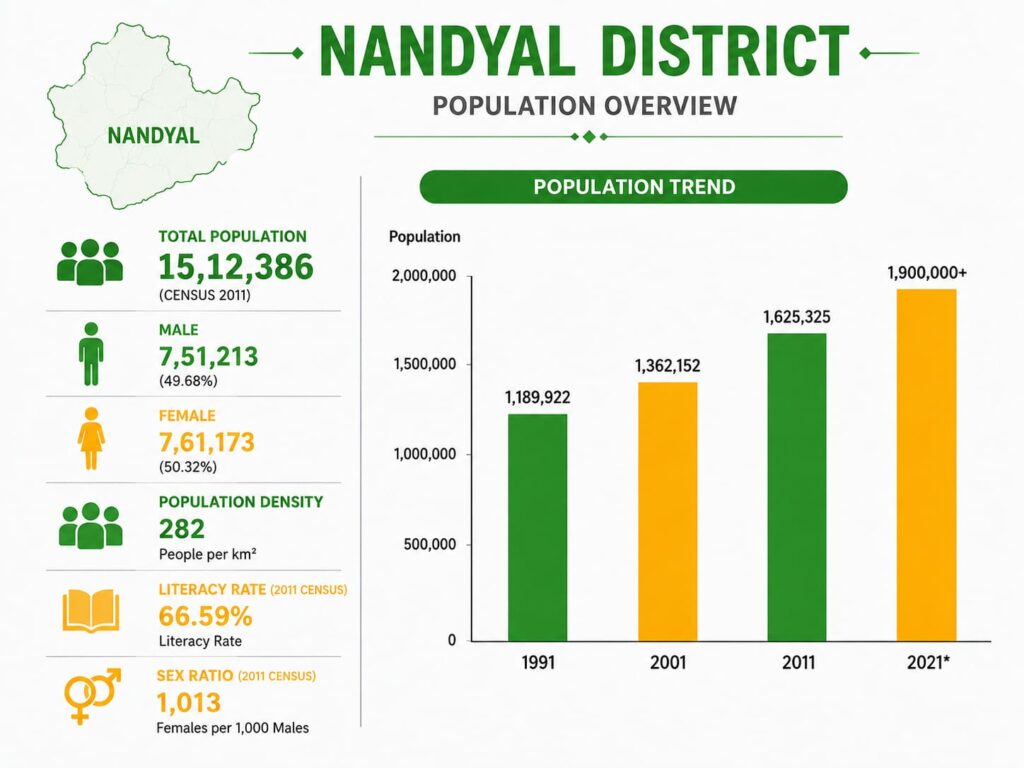
Nandyal District is a culturally rich and rapidly developing district with a population of over 1.7 million people. Known for its agricultural strength, spiritual heritage, and natural resources, the district plays an important role in the economy of Andhra Pradesh. Nandyal has witnessed steady growth through improvements in agriculture, irrigation, education, healthcare, and connectivity. With its strategic location and abundant natural resources, the district continues to attract investment and development opportunities, contributing to its overall progress and prosperity.
Key Highlights
- Total Population: 1,788,840 (Census 2011)
- Male Population: 899,078 (50.26%)
- Female Population: 889,762 (49.74%)
- Population Density: 247 persons per sq. km
- District Headquarters: Nandyal
- Growth Drivers: Agriculture, Irrigation Projects, Tourism, Education, Mining, Trade, and Infrastructure Development
Geographical Area
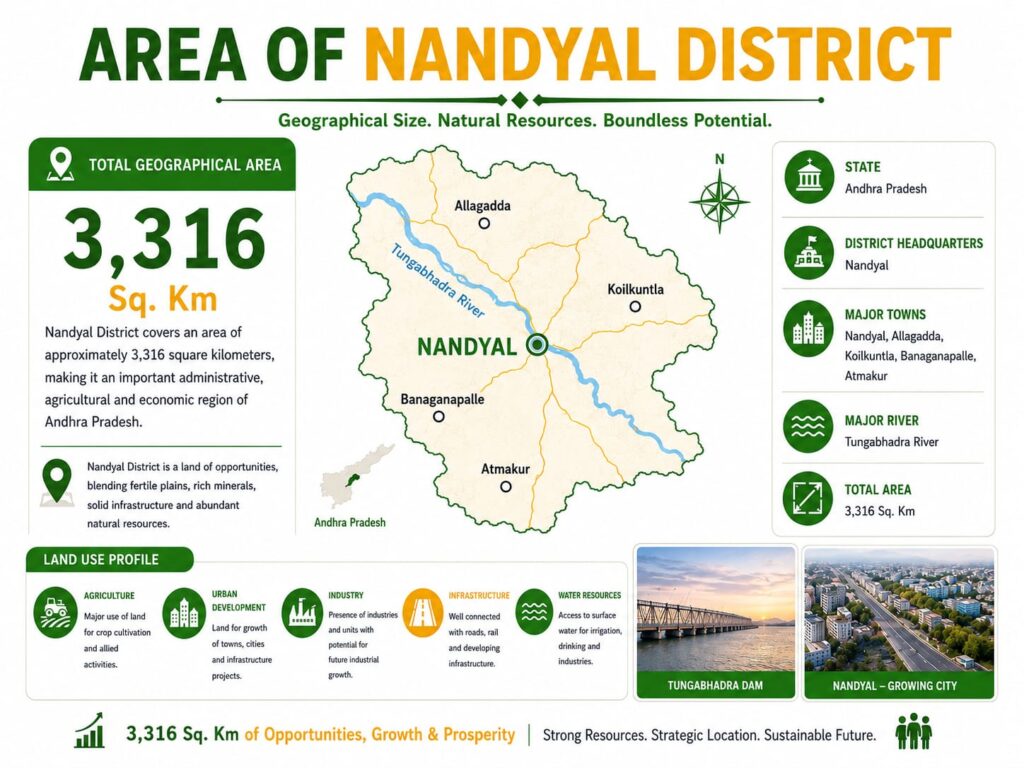
Nandyal District spans approximately 9,682 square kilometers and is situated in the south-central part of Andhra Pradesh. The district is known for its vast agricultural lands, scenic hill ranges, dense forest areas, important irrigation projects, and rich mineral resources. With a balanced mix of rural and urban development, Nandyal plays a significant role in the agricultural, economic, and cultural growth of the state.
Key Facts
- Total Area: 9,682 Sq. Km
- District Headquarters: Nandyal
- Major River: Kundu River
- Major Towns: Nandyal, Allagadda, Atmakur, Banaganapalle, Dhone
- Key Land Use: Agriculture, Forestry, Irrigation, Mining, Tourism, and Infrastructure Development
Facts & Figures Of Nandyal District
Major Towns Of Nandyal
Nandyal
District Headquarters
Major trade and education center.
Well connected by road and rail.
Gateway to the Nava Nandi temples.
Dhone
Transport Hub
Major railway junction in the region.
Supports trade and commerce.
Connects Rayalaseema to other areas.
Banaganapalle
Mango Town
Famous for Banaganapalle mangoes.
Rich in history and culture.
Home to forts and heritage sites.
Nandikotkur
Agricultural Center
Important trading town.
Benefits from irrigation projects.
Supports the rural economy.
Atmakur
Gateway to Srisailam
Located near Nallamala forests.
Agriculture drives the local economy.
Known for scenic surroundings.
Allagadda
Agricultural Hub
Known for farming and local markets.
Important regional business center.
Near several tourist attractions.